Sightera Biosciences raises €3M to close the gap between AI drug design and the biology of therapy-resistant patients
Most AI drug discovery platforms are trained using public chemical databases, which, although large, are generic. While the molecules they design are informed by structural chemistry, they do not take into account how patients with specific diseases actually respond to treatment. For therapy-resistant cancers and fibrosis, where standard drug development approaches have repeatedly failed, this discrepancy between the training data and clinical reality exacerbates the problem.
Sightera Biosciences, a Belgian tech-bio company spun out from the University of Antwerp and Antwerp University Hospital, has built its platform around a different data source. Samples derived from patients with therapy-resistant diseases are collected through hospital partnerships and used to develop highly accurate models that mimic the actual biology of the diseases. The platform then tests various treatments on these models to generate extensive, proprietary datasets detailing precisely how diseased tissue responds. Sightera’s generative AI uses this response data as its training foundation to design new drug candidates that have been proven to be effective in patient-derived systems. The therapeutic focus is oncology and fibrosis. The lead programme, SIGHT001, is an oncology molecular glue candidate advancing towards preclinical candidate selection.
Sightera has just closed a €3 million pre-seed round co-led by Entourage, Anacura, and QBIC. The capital will support AI platform’s expansion and team’s growth, as well as the development of partnerships with pharmaceutical and biotechnology companies.
Sources: Sightera Biosciences | Crunchbase
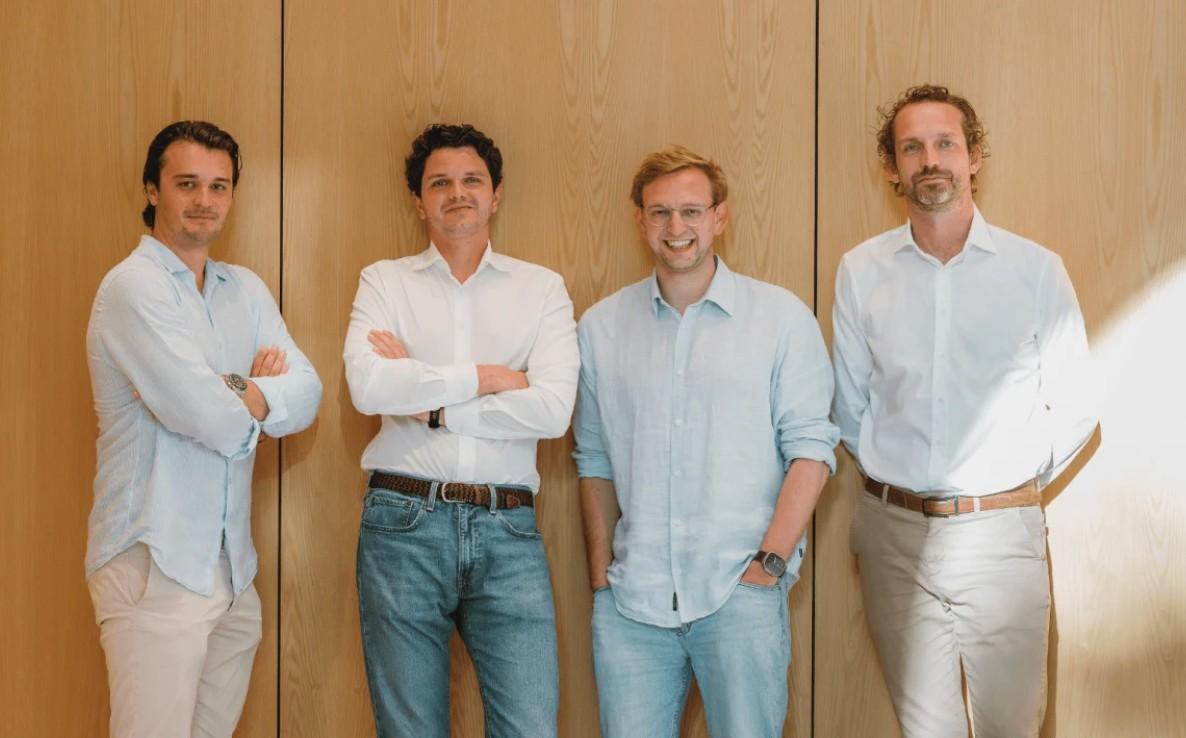
Founders: Hendrik Vercammen, Maxim Le Compte, Christophe Deben, Lars Vanlommel